MESH-D
ContactMESH-D
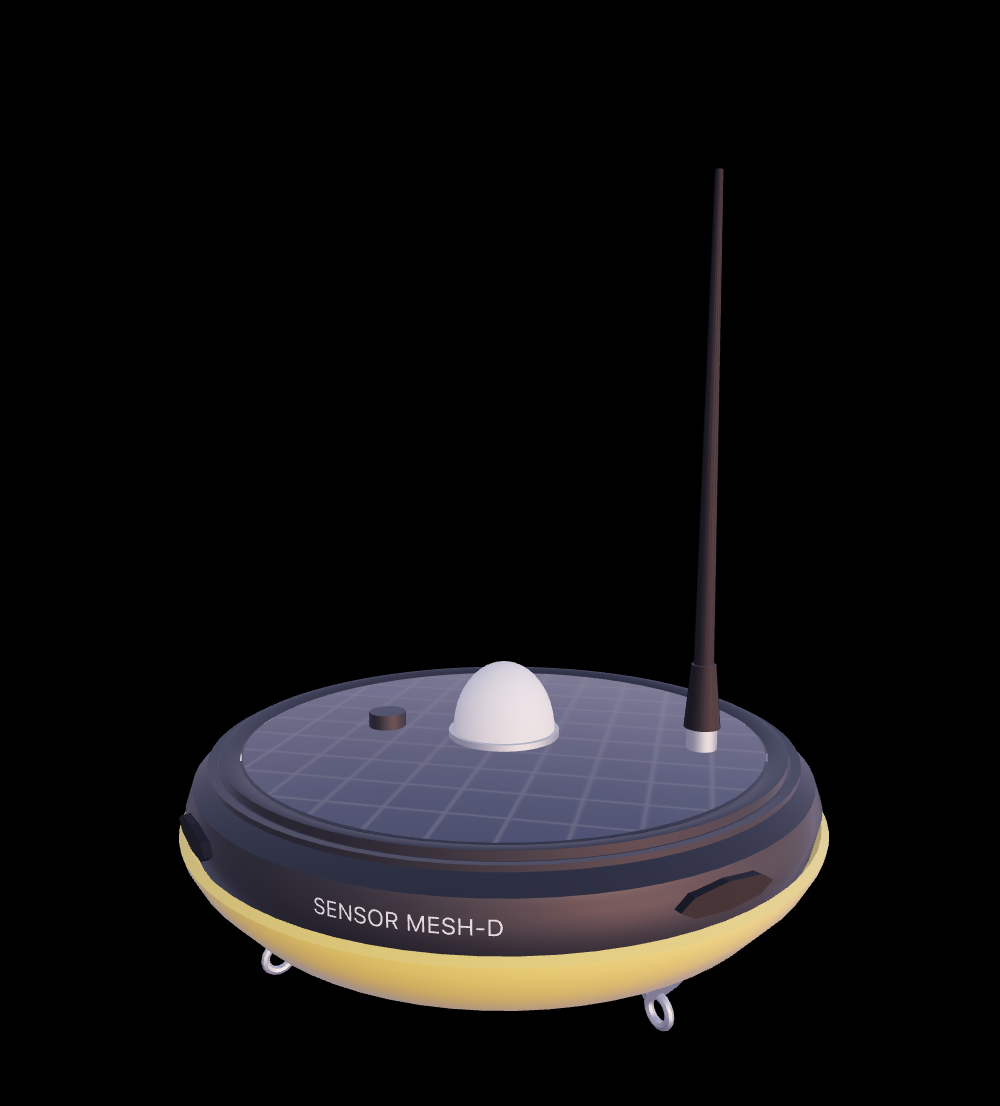
Distributed Maritime Acoustic Intelligence
A rapidly deployable network of autonomous passive-acoustic sensing nodes for maritime awareness, critical infrastructure monitoring and ocean science.
Concept development • Simulation • Prototype programme
- Passive sensing
- Edge processing
- Distributed networking
- Environment-aware deployment
01The idea
See more of the maritime environment.
Much of maritime awareness depends on what can be seen, transmitted or imaged above the surface.
Mesh-D adds another layer.
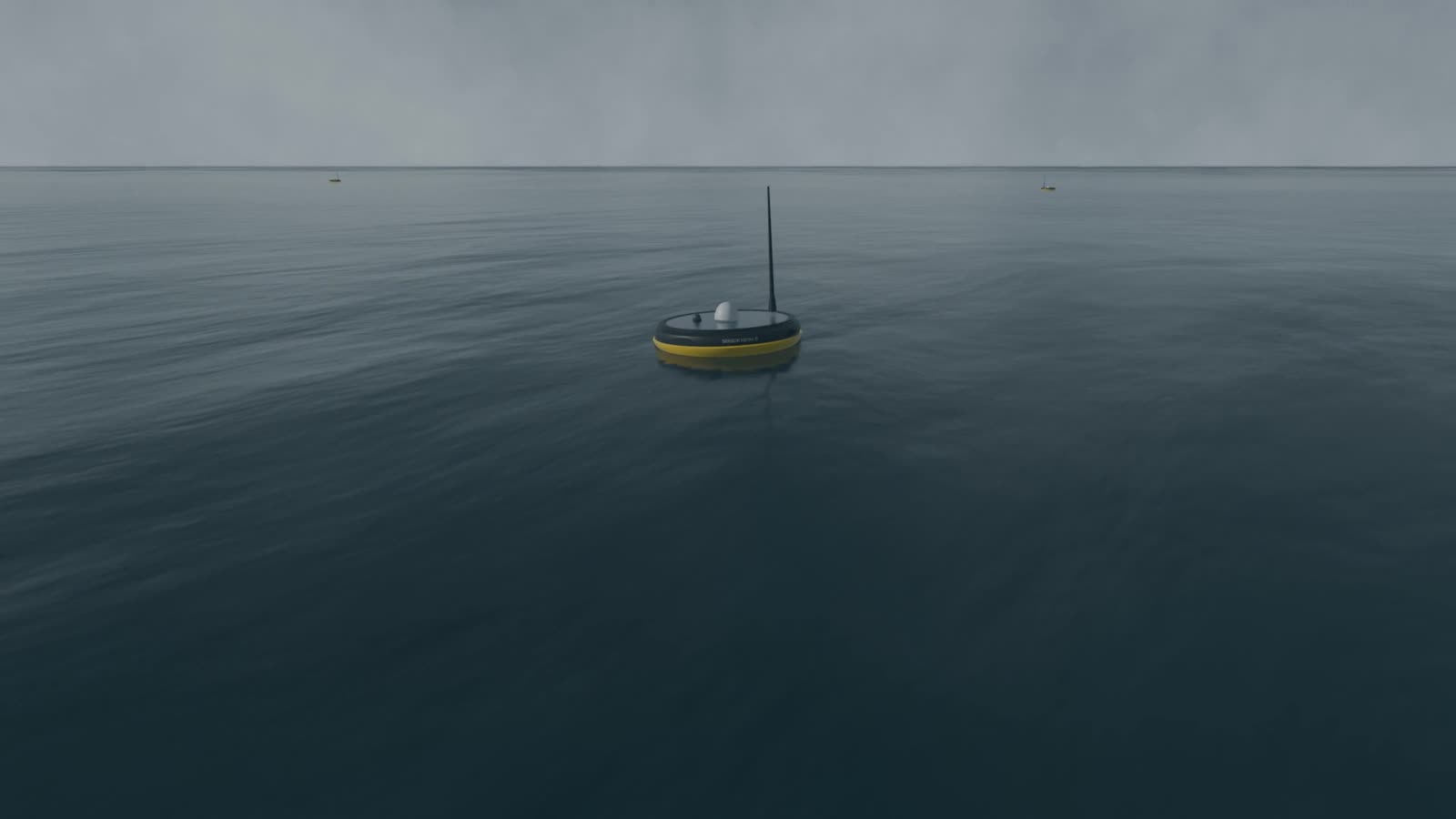
A distributed network of autonomous floating nodes listens below the surface, processes acoustic activity locally and shares relevant observations with wider maritime systems.
Surface
- AIS
- Radar
- Satellite
- EO
Below surface
- Passive acoustic sensing
Multi-modal maritime awareness
- Independent layers, correlated observations
Mesh-D is designed as a complementary sensing layer — not a replacement for AIS, radar, satellite or existing sonar systems.
02Hardware
Designed for deployment, not the laboratory.
Every subsystem is chosen for unattended operation at sea and straightforward replacement ashore.
Passive hydrophone
Configurable sensor depth below surface noise.
Edge compute
Low-power always-on detection with event-triggered higher-performance processing.
GNSS + timing
Position, synchronisation and deployment tracking.
Multi-path comms
Satellite, cellular and LoRa-class local communications.
Solar + battery
Energy-aware architecture for extended unattended operation.
Drogue stabilisation
Independent load path to reduce wind-driven drift.
Local storage
Retain high-resolution acoustic data while transmitting compact events.
AIS receive
Correlate cooperative vessel traffic with acoustic observations.
Loading assembly…
Exploded assembly
Scroll to separate the assembly; scroll back to close it. Drag to orbit.
Concept configuration
- Nominal diameter
- 560 mm
- Typical hydrophone deployment range
- 15–30 m
- Indicative battery class
- ~500 Wh
- Indicative solar class
- 20–30 W
- Communications options
- Sat / LTE / LoRa
Illustrative concept configuration. Final specifications subject to engineering and sea-trial validation.
03The network
One node listens.
A network creates context.
Individual passive sensors can identify acoustic activity.
Distributed nodes allow observations to be compared across space and time — increasing confidence, reducing ambiguity and enabling network-level detection and localisation research.
Node
Detection
thenMultiple nodes
Corroboration
thenNetwork
Contact confidence + spatial context
Unassociated acoustic contact
- Nodes
- D-07 D-11 D-12
- AIS correlation
- None
- Classification
- Vessel-like acoustic source
- Confidence
- High
Illustrative software concept — not live data.
04Software / digital twin
The sensor is only half the system.
Underwater acoustic performance changes with location, depth and environmental conditions. Mesh-D's planning layer models those conditions before a single node enters the water.
- INFOMAR / bathymetry
- Oceanographic data
- Sound speed
- Seabed
- Sea state
- Target profile
- 01Acoustic propagation model
- 02Deployment optimiser
- 03Mesh-D plan
- 04Live network
The planning layer is intended to determine:
- Candidate node locations
- Hydrophone depth
- Node spacing
- Predicted detection probability
- Multi-node overlap
- Drift
- Energy endurance
- Communications availability
- Deployment persistence
One sensor = one fixed detection circle.
Environment-specific predicted performance.
05Maritime domain awareness
An additional sensing layer for MDA.
Mesh-D is intended to provide detection, corroboration and cueing information to wider maritime awareness systems. Passive acoustics alone does not confirm identity — it strengthens the picture.
Non-cooperative activity
Provide acoustic evidence of activity that may not correspond to AIS or other cooperative signals.
Critical infrastructure
Temporary or persistent monitoring around subsea cables, offshore infrastructure and strategic maritime areas.
Sensor fusion
Provide independent observations to systems combining AIS, radar, satellite, EO/IR and other intelligence sources.
Rapid deployment
Deploy temporary sensing fields without installing large permanent infrastructure.
Cueing
Use distributed passive observations to direct higher-performance or higher-cost sensing assets.
06Science and civil applications
The same network. Different mission.
The scientific and security applications reinforce each other. Better environmental models improve acoustic predictions; better acoustic datasets improve detection and classification models.
Passive acoustic monitoring
Continuous or event-triggered underwater acoustic observation.
Marine mammal research
Support research into presence, distribution and behaviour.
Underwater noise
Characterise vessel, infrastructure and ambient sound.
Offshore development
Environmental baseline and operational monitoring around offshore energy and infrastructure.
Oceanographic research
Combine acoustic data with environmental observations and drifting-platform measurements.
07Why distributed
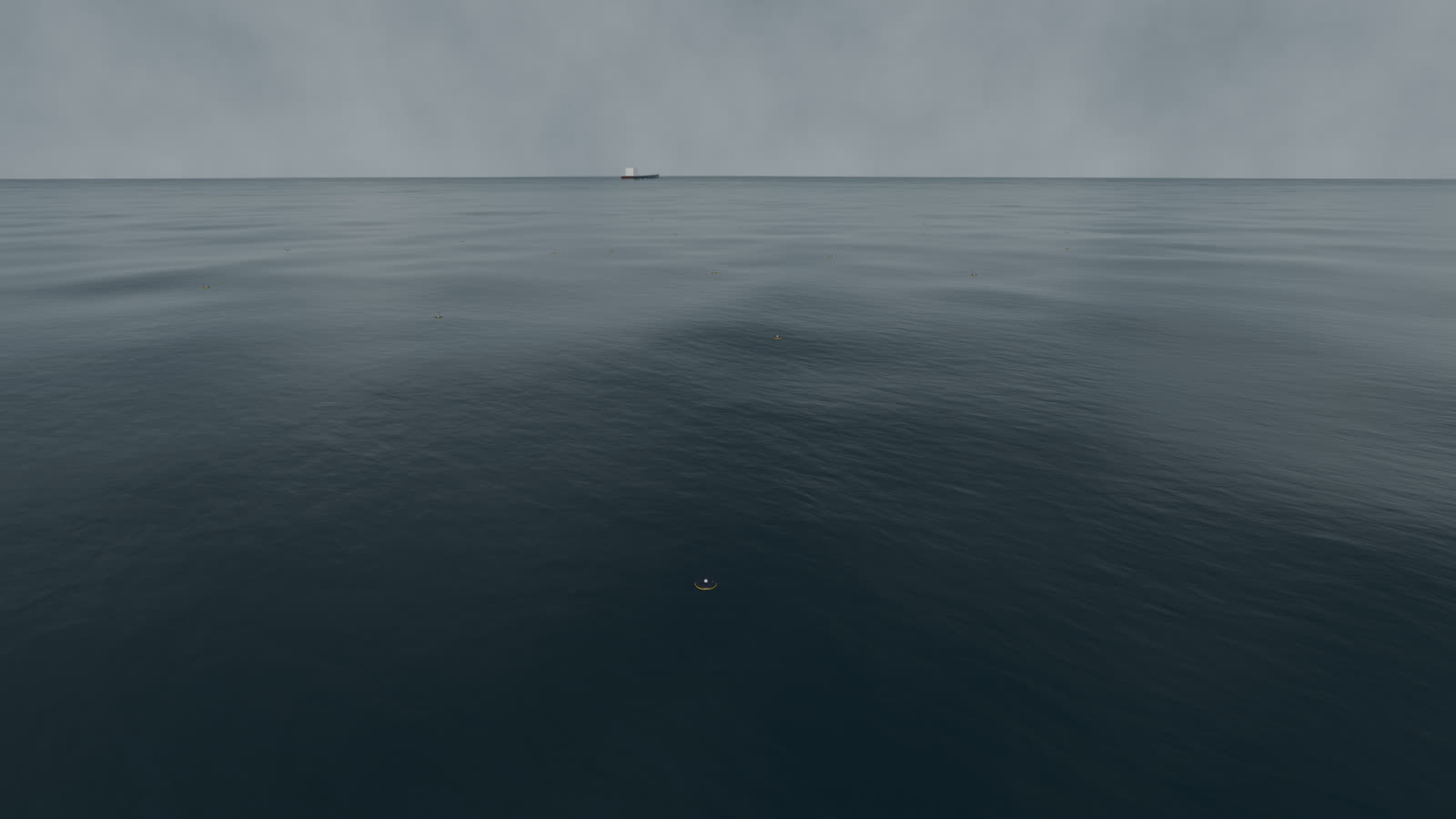
Designed around quantity, flexibility and loss tolerance.
Traditional maritime sensing can depend on small numbers of expensive assets. Mesh-D explores a different trade: lower-cost nodes, more sensors, distributed risk, simpler deployment, configurable mission duration, replaceable COTS subsystems and software-defined deployment planning.
Traditional model
- Few
- High-value
- Complex
- Persistent infrastructure
Mesh-D model
- Distributed
- Deployable
- Modular
- Scalable by mission
The aim is not to outperform every high-end sensor. The aim is to provide useful additional information at a deployment cost and scale that enables sensing where conventional systems may be impractical.
08Deployment profiles
One platform. Multiple deployment profiles.
Mesh-D
- Rapid deployment
- Short-to-medium missions
- Oceanographic sensing
- Temporary MDA fields
- Current-following observation
09Deployment sequence
From model to mission.
01
Model the environment
Bathymetry, sound speed, currents and mission constraints.
02
Plan the network
Determine node positions, depths and expected coverage.
03
Deploy
Rapidly deploy sensors from suitable vessels.
04
Sense + process
Detect locally and share compact observations.
05
Fuse + respond
Correlate Mesh-D observations with wider maritime data.
10Research foundation
Built on established science. Focused on a new system architecture.
Passive acoustics
Decades of underwater acoustic science and passive monitoring.
Autonomous marine sensors
Small, low-power oceanographic platforms already operate for extended periods at sea.
Edge AI
Low-power event detection increasingly allows complex processing to move onto the sensor.
Environment-aware sensor planning
Modern acoustic models, bathymetry and optimisation methods allow deployment to be designed around real environmental conditions.
11Development status
From concept to sea trial.
Early stage, technically disciplined: each phase gates the next.
Now
current- Mission definition
- Hardware architecture
- Environmental simulation
- Acoustic modelling
Next
- Digital-twin validation
- COTS engineering prototypes
- Controlled vessel trials
Then
- Multi-node sea trial
- Model calibration
- Operational pilot
Interested in testing where distributed passive sensing can add value?
We are exploring research, maritime-security, offshore and scientific pilot applications for Mesh-D.